

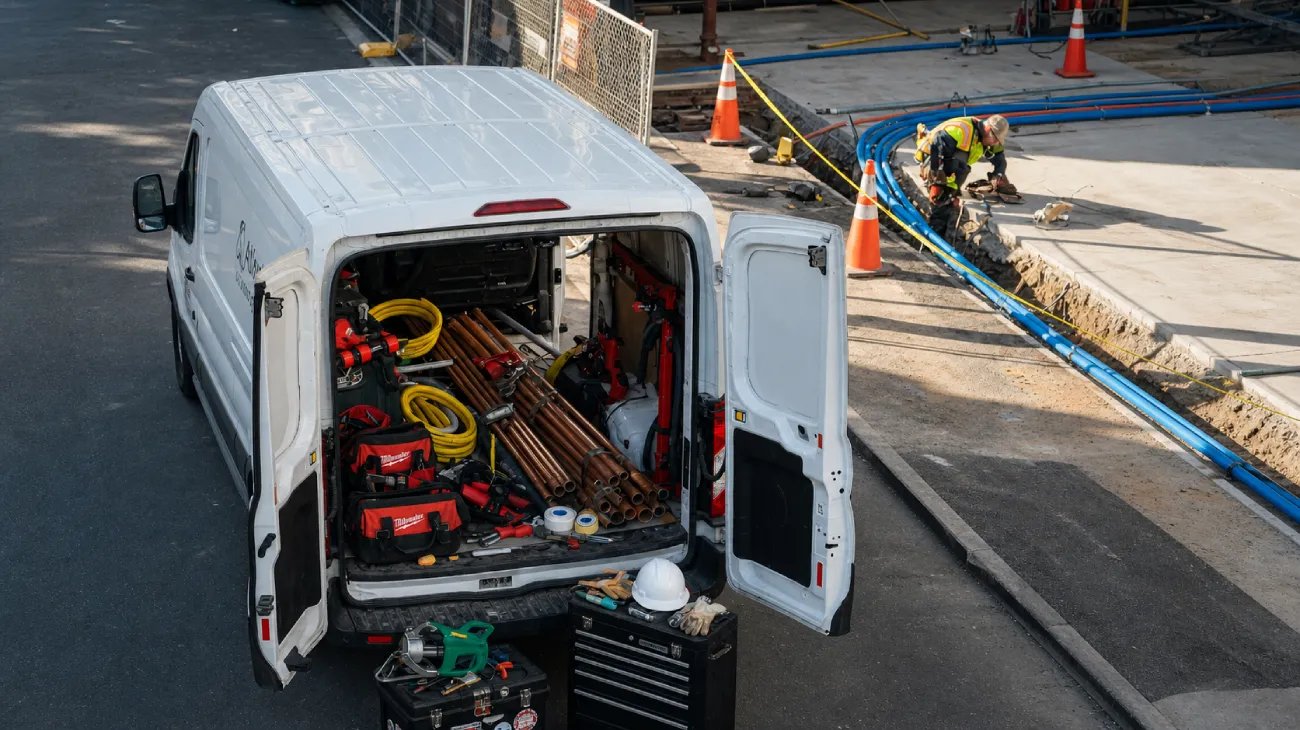

Plumbing businesses rely heavily on specialised tools and equipment to carry out daily work. From pipe threading machines and drain cameras to laser levels, power tools, and diagnostic equipment, these items are essential for completing jobs efficiently and safely.
Because plumbers regularly move between job sites, tools are often transported in vehicles, stored on construction sites, or temporarily left at project locations. This mobility creates several exposure points where tools can be stolen, lost, or damaged. Tools insurance is designed to address these risks by protecting the equipment plumbing businesses rely on to operate.
Why tool protection is important for plumbing businesses
Unlike many other professions, plumbing work requires a wide range of specialised equipment that can be expensive to replace. Drain inspection cameras, pressure testing equipment, pipe cutters, and power tools represent a significant investment for most plumbing businesses.
If essential tools are stolen or damaged, the impact can go beyond the cost of replacing the equipment itself. Plumbing contractors may also face delays in completing scheduled work, which can disrupt projects and reduce income.
Tools insurance helps reduce this operational risk by providing financial support when insured equipment is lost or damaged under covered circumstances.
When tools may be covered on job sites
Many plumbing projects require tools to remain on site during the course of the work. Construction and renovation environments often involve multiple trades operating at the same time, and plumbing contractors may leave equipment on site overnight while a project is underway.
Tools insurance policies may provide cover for equipment stored on construction sites, particularly when tools are secured in locked storage areas or containers. However, policies often include conditions relating to how tools must be stored.
For example, insurers may require that tools are:
- Stored in locked buildings or secured containers
- Kept within controlled site areas
- Protected from weather exposure where possible
Construction sites can present a higher theft risk due to the number of contractors moving through the location. Understanding the storage requirements set out in the policy helps ensure tools remain eligible for cover if a loss occurs.
Coverage while tools are in transit
Plumbers frequently transport tools between multiple job locations during the working day. This movement creates the potential for accidental damage during transport or theft from vehicles when tools are temporarily unattended.
Tools insurance often extends to equipment while it is being transported between work locations. Coverage may apply when tools are stored in work vehicles, trailers, or other transport equipment used by the plumbing business.
Because tools are regularly moved throughout the day, policies are typically designed to account for normal transport risks associated with trade work.
However, insurers may still impose certain requirements regarding how equipment must be secured while in transit.
Theft risks involving work vehicles
Vehicle theft or break-ins represent one of the most common causes of tool loss for tradespeople. Work vehicles often contain valuable equipment, making them attractive targets when parked overnight or left unattended.
Many tools insurance policies include conditions for tools stored in vehicles. These conditions often require that:
- Vehicles are locked when unattended
- Tools are stored out of sight where possible
- Equipment is secured within the vehicle storage area
Some policies may also include time-based conditions for overnight storage in vehicles. For example, insurers may require that tools be removed from vehicles after certain hours or stored in secure premises overnight.
Understanding these conditions is important because failure to meet them may affect whether a theft claim is accepted.
Accidental damage to tools during work
In addition to theft, tools used in plumbing work can also be damaged during normal operations. Equipment may be dropped, exposed to water or chemicals, or damaged during transport between work locations.
Tools insurance policies often include cover for accidental damage occurring during normal business use. This can be particularly valuable for specialised equipment that would be costly to repair or replace.
Examples of accidental damage scenarios may include:
- Equipment dropped while working in confined spaces
- Electrical tools damaged by water exposure
- Transport-related damage between job sites
The extent of accidental damage cover can vary between policies, so reviewing the specific coverage terms is an important step when arranging tools insurance.
Insuring high-value plumbing equipment
Some plumbing tools represent particularly high-value investments. Diagnostic equipment such as drain cameras or electronic testing devices may cost several thousand dollars each.
When insuring these items, policies may require that individual tools be listed with specified values. This allows the policy to reflect the true replacement cost of specialised equipment.
Accurately declaring tool values is important because underestimating equipment value may result in insufficient coverage if a claim occurs.
For plumbing businesses operating with large tool inventories, maintaining an up-to-date equipment list can help ensure insurance limits remain appropriate.
Managing tool exposure across multiple work environments
Plumbers often operate across a variety of work environments during the course of a week. Residential homes, commercial buildings, construction sites, and service vehicles may all be used for storing or transporting equipment.
Each environment presents slightly different risks. Job sites may present theft exposure, vehicles introduce transport risks, and active work environments can lead to accidental damage.
Tools insurance is designed to respond across these environments when the policy conditions are met. Understanding how coverage applies in each location helps plumbing contractors manage their equipment risk more effectively.
Protecting tools and equipment is an important part of keeping plumbing operations running smoothly. When essential tools are lost or damaged, work can quickly come to a halt until replacements are obtained.
These exposures form part of the broader risk profile faced by plumbing businesses. For a full overview of how liability, project risks, and equipment protection fit together, see our guide to Plumbers Insurance and how cover is structured for plumbing businesses in Australia.
If you rely on specialised tools to carry out plumbing work and want to review how equipment can be protected under an appropriate insurance structure, speaking with us can help clarify the options available.