

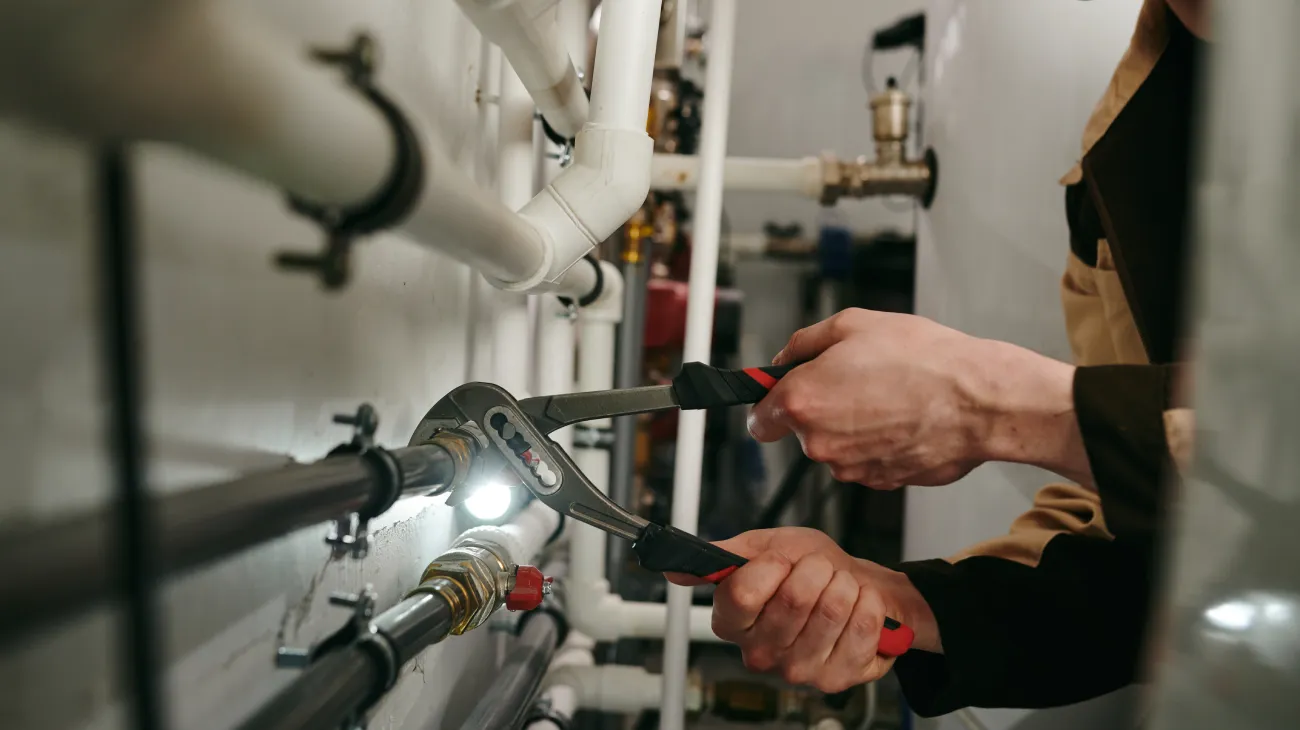

For most Victorian plumbing businesses, gas work is everyday work. Connecting a cooktop, replacing a hot water service, fitting a space heater or extending consumer gas piping are routine jobs, but each one can have serious consequences if a fitting leaks or a flue is installed incorrectly.
This work is generally Type A gasfitting, and it is insured under the same framework as the rest of your licensed plumbing. We arrange plumbers liability policies for Victorian plumbing businesses, and for gas work three points are worth understanding well: what the policy is required to include, how rectification differs from resulting damage, and how long each part of the cover needs to last.
Where Type A gasfitting sits in Victorian licensing
Type A appliances are generally certified appliances. They include the appliances most gasfitters work on daily, such as cookers, space heaters, central heating units, water heaters and most commercial catering equipment.
Installing, commissioning, servicing and replacing these appliances, along with the consumer gas piping that supplies them, falls within the general gasfitting licence class. Narrower classes also exist for practitioners who only service or convert Type A appliances, while Type B gasfitting sits outside the general class altogether. Because general gasfitting is a licensed plumbing class, the insurance requirements for licensed plumbers apply to it.
Why gas work almost always triggers the plumbers
Ministerial Order
The insurance a Victorian plumber must carry is set by a Ministerial Order, and it applies to work that needs a compliance certificate. Most plumbing work only needs a certificate above a set value, currently $750. Gas work is different. Installing, relocating or replacing any Type A appliance, converting an appliance to a different gas, and installing or altering consumer gas piping all need a compliance certificate regardless of cost.
For that work, your insurance needs to cover:
- Public liability, for injury to others or damage to their property arising from the work
- Completed work liability, for injury or property damage linked to the work after the compliance certificate is issued
- Consumer law liability, for certain liabilities under consumer protection legislation
- Rectification of defects, for the cost of correcting defective plumbing work
Victorian plumbers liability policies generally group the defects and consumer law elements into a Consumer Protection Liability section. This is the main thing that separates them from a standard public liability policy, which often excludes or limits the cost of fixing the work itself.
Rectification versus resulting damage on gas work
One gas fault can create two very different costs. Say you replace a hot water service and a fitting is not properly sealed. If the leak is found early, the cost may be limited to returning, retesting and remaking the connection. If it ignites, the cost may include fire damage to the laundry and surrounding rooms, and possibly injury to an occupant.
These costs sit in different parts of the policy. Correcting the defective connection falls under Consumer Protection Liability, where the minimum required limit is $50,000 for domestic work and $100,000 for non-domestic work per compliance certificate. Some policies offer higher limits, and this is worth considering if you do larger jobs. Fire damage and injury would generally be considered under public liability or completed work liability, which carry a minimum of $5 million for any one occurrence, with a different excess and conditions that may apply.
How long each part of the cover needs to last
Gas faults are not always immediate. A flue installed incorrectly may only cause problems the following winter, and a defect in concealed piping can take years to show. The Ministerial Order deals with this timing in two different ways, and it is a mistake to treat them as one.
The six year period applies to defects and the related consumer protection liabilities, along with the extra domestic covers for consequential loss and non-completion. This cover must run from when you agree to do the work until six years after the last compliance certificate is issued for it, and the Order is designed so it continues for that period even if you later stop trading or do not renew the policy.
Public liability and completed work liability work differently. They generally respond to injury or damage that happens while a policy is in force, regardless of when the work was done. That means older work relies on you holding current cover when an incident occurs, and policies may also limit claims first notified more than six years after the compliance certificate. Keeping cover continuous, and thinking about run off cover before you retire or close the business, matters for this reason.
Domestic and commercial Type A gasfitting
The Ministerial Order treats domestic and non-domestic work differently. For gas work on a home, you also need cover for certain consequential losses suffered by the owner, such as lost deposits or reasonable alternative accommodation costs, and for non-completion of the work in specified circumstances.
Commercial Type A work, such as installing catering equipment in a restaurant, carries a higher minimum for the defects section, and policies may exclude consequential financial loss. Commercial clients may also set their own liability limits and evidence of cover requirements, which can sit well above the statutory minimums.
Where Type A cover reaches its limits
A plumbers liability policy is underwritten around the activities you declare. If you move into Type B work on industrial appliances, do not assume your existing policy extends to it. Type B gasfitting has its own licence class and Ministerial Order, and insurers generally assess it separately.
Within Type A work, policies may also include exclusions or limitations for work outside your licence class, wear and tear, asbestos and property in your care, custody or control. Subcontractors need attention too. The Order requires your insurance to extend to liability arising from people you contract to do the work, although how a policy responds still depends on its terms and what you have disclosed.
Keeping your Type A gas work properly insured
For most plumbing businesses, Type A gas work is insured through the same Ministerial Order as the rest of their licensed work, with the six year period applying to rectification rather than every type of claim. Our guide to how Type A and Type B gasfitting insurance compare in Victoria explains what changes once Type B work is involved. If you want to confirm your plumbers liability policy reflects your gas work, contact us and our team can review your declared activities and limits with you.