

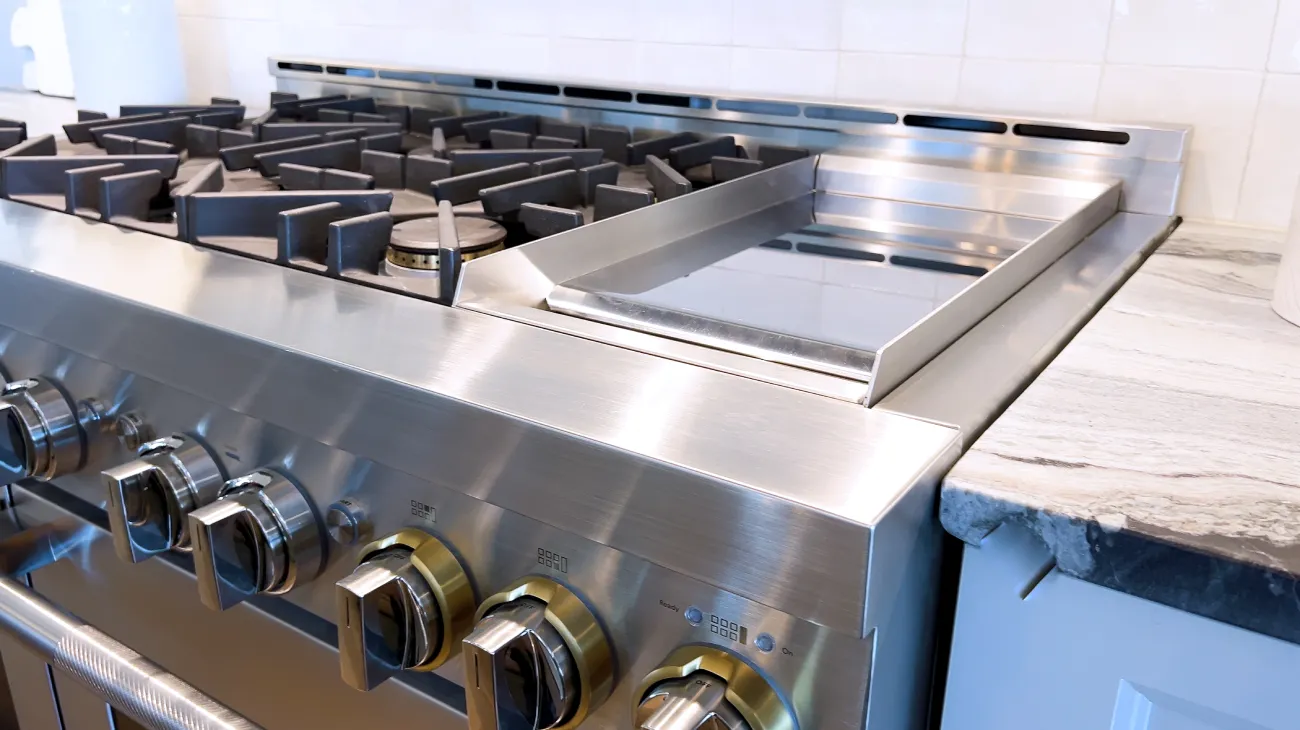

Walk into a factory, a hospital plant room or a commercial bakery and you may find gas appliances that look like the work you do every day, alongside some that look nothing like it. Whether that equipment needs a Type B gasfitter is not decided by its size, where it is installed or how industrial it looks. It is decided by how the appliance is classified under Victorian gas safety law.
Getting this right matters for your licence, for gas safety and for your insurance. Work on a Type B appliance needs a Type B licence, falls under a different Ministerial Order and is underwritten differently by insurers. Knowing which appliances are likely to be Type B, and how to confirm it, helps you decide what work you can take on and what to check first.
How Victoria classifies gas appliances
Classification turns on certification and the legal definitions, not appearance or location. A Type A appliance is one covered by an authorised acceptance scheme, or individually accepted as a Type A appliance. In practice these are mass produced, certified appliances such as cookers, space heaters, central heaters, water heaters, catering equipment and leisure appliances.
A Type B appliance is an appliance with gas consumption above 10 MJ/h that is not a Type A appliance, including its components and fittings from the appliance manual shut-off valve onwards. Both parts of that definition matter. A certified commercial appliance remains Type A no matter where it is installed, and high gas consumption alone does not make an appliance Type B if it holds Type A certification.
The standard Type B gasfitting class covers single Type B appliances with an energy input above 10 MJ/h and below 5,000 MJ/h, along with steam boilers and thermal fluid heaters below 20,000 MJ/h that form part of an integrated industrial process. Work runs from the gas isolating valve beside the appliance through to its flue connection.
Appliances that are often Type B
- Industrial boilers, including steam boilers and thermal fluid heaters that form part of an industrial process
- Furnaces and kilns used in metal treatment, ceramics, glass and brick manufacturing
- Industrial ovens and dryers built into food production, coating, curing or printing lines
- Direct fired air heaters, spray booths and their afterburners
- Incinerators and cremators
- Gas engines, turbines and cogeneration plant
- Process kettles, baths and fryers used in galvanising, brewing and large scale food production
- Gas flares and enclosed ground flares used to manage process gases
Some equipment that sounds industrial is certified as Type A, and some equipment that sounds commercial is not. The appliance’s certification or acceptance details are what settle the question.
Commercial appliances that are often Type A
Many appliances in commercial premises are certified Type A appliances. Commercial cooktops, ovens, fryers, chargrills and woks in restaurant kitchens are commonly certified, as are commercial water heaters and many space heating and central heating appliances in offices, schools and retail buildings.
With a general gasfitting licence, you can generally work on these appliances in commercial premises without a Type B licence, provided the appliance is certified Type A and the work falls within your licence class. The same kind of appliance built to order, modified from its certified configuration or integrated into a production process may need closer assessment.
When Type B work becomes advanced work
Some activities fall outside the standard Type B class and into the separate Type B gasfitting advanced class. These include adjusting input parameters on a programmable burner management system, commissioning a Type B appliance without manufacturer supplied commissioning data, and work on appliances associated with volatile solvents or hazardous atmospheres.
These situations often arise with older plant, custom built equipment, spray booths, solvent drying ovens and chemical processing sites. A standard Type B licence may not be enough for this work, and insurers may want it described separately on your policy.
Confirming classification before you start
Type B appliances must be accepted by Energy Safe Victoria before they can be legally supplied, sold or installed, and a licensed Type B gasfitter typically applies for that acceptance. An accepted Type B appliance carries a compliance plate showing its acceptance number, serial number, installation location and date of installation. Type B work also sits outside the plumbing compliance certificate scheme.
Before quoting or starting work on unfamiliar equipment, check:
- Whether the appliance carries Type A certification or a Type B acceptance plate
- Its gas consumption and whether it forms part of an industrial process
- Whether the job involves burner management systems, commissioning or hazardous atmospheres
- Whether your licence classes cover both the supply piping and the appliance work
- Where the answer is unclear, Energy Safe Victoria provides technical guidance on appliance classification. Confirming it before the job starts is far easier than resolving it after an incident
Why classification matters for your insurance
The classification flows straight into your insurance. It decides which licence you need, which Ministerial Order applies and what your insurer needs to be told. A policy arranged around Type A work on catering equipment should not be assumed to extend to commissioning an industrial furnace, even if both jobs are described as servicing gas appliances.
The size of the potential loss changes too. Type B appliances often sit within expensive plant, so damage to the appliance you are working on, which may be subject to a capped sublimit for property in your care, can be significant. A client’s lost production may be excluded or limited, and industrial clients often ask for liability limits above the statutory minimum before letting contractors on site.
Matching your licence and cover to the appliance
The appliance in front of you decides whether the job is Type A or Type B, and that decision carries through to your licence and your cover. Our guide to how Type A and Type B gasfitting insurance compare in Victoria explains how these requirements fit together. If you are taking on industrial or commercial appliance work, contact us and we can talk through the appliances you work on and how your policy should describe them.