

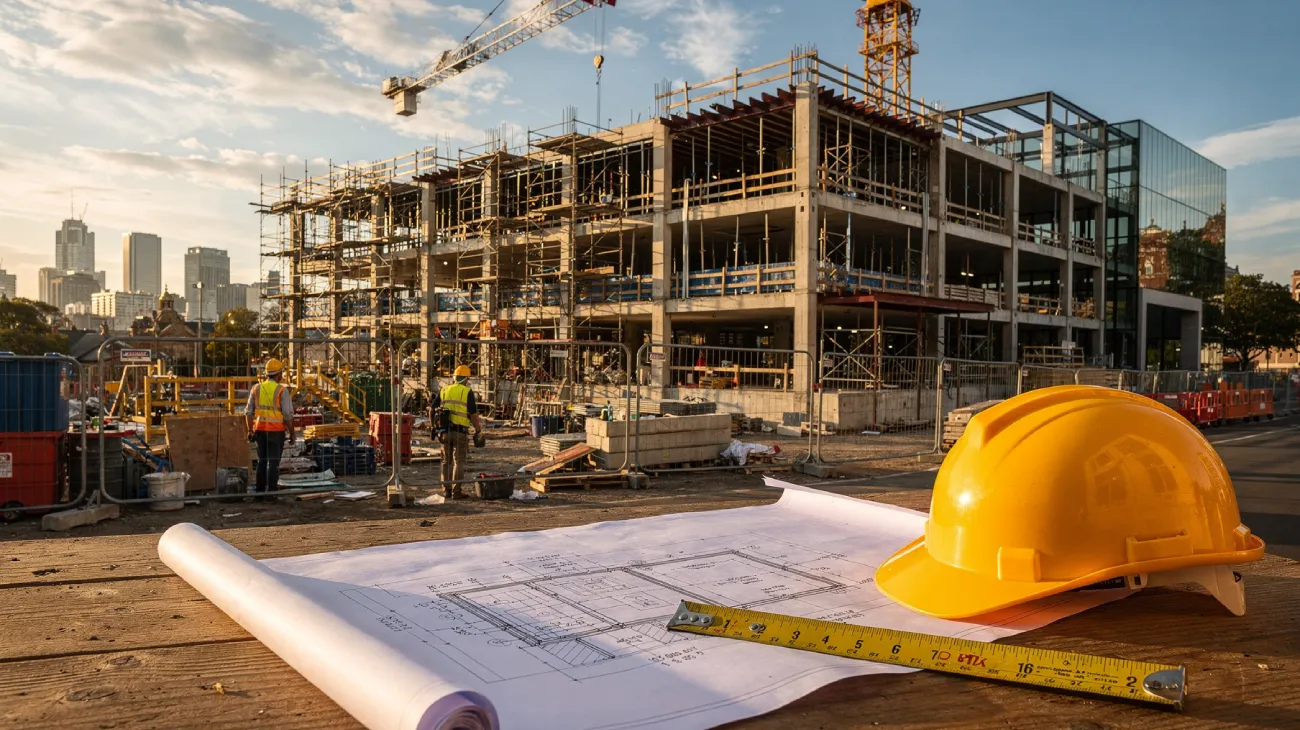

Commercial construction projects involve significant investment, tight project schedules and multiple parties working together under complex contractual arrangements. Whether you’re constructing warehouses, office developments, retail centres or industrial facilities, every project carries risks that have the potential to affect your business financially and operationally.
From damage to works in progress and third party liability claims to subcontractor issues and project delays, the financial impact of an unexpected event can be substantial. Having the right insurance strategy in place before work begins can help protect your business while giving clients, lenders and principals greater confidence in your ability to deliver projects.
Commercial Builders Insurance is not a single insurance policy. It is typically a carefully structured combination of insurance covers designed to protect different aspects of your building business throughout the construction lifecycle. The right combination of cover will depend on factors such as the type of projects you undertake, the value of your contracts, the trades you engage and your contractual responsibilities.
As insurance brokers, we work with commercial builders across Victoria and Australia to help structure insurance solutions that align with their operations, contractual obligations and risk profile.
What does Commercial Builders Insurance cover?
Every commercial building business operates differently, which means insurance should be tailored to suit the specific risks associated with your work. Rather than relying on one policy, commercial builders often require several complementary covers that work together to protect both the business and individual projects.
Depending on your operations, your insurance program may include:
- Contract Works Insurance
- Public Liability Insurance
- Professional Indemnity Insurance where design responsibilities exist
- Tools and Equipment Insurance
- Plant and Machinery Insurance
- Commercial Motor Insurance
- Business Insurance
- Cyber Insurance
- Personal Accident Insurance for eligible business owners
- Management Liability Insurance where appropriate
Each policy is designed to respond to different risks and circumstances, subject to the policy wording, limits, conditions and exclusions. Structuring these covers correctly helps reduce the likelihood of gaps in protection across your business.
Who is Commercial Builders Insurance designed for?
Commercial Builders Insurance is generally suited to licensed builders and construction businesses undertaking commercial building projects throughout Victoria and Australia.
This may include businesses involved in:
- Commercial construction
- Industrial developments
- Retail and hospitality projects
- Office fit-outs
- Educational facilities
- Healthcare developments
- Warehousing and logistics facilities
- Government projects
- Multi-storey commercial buildings
- Major refurbishments and commercial renovations
Insurance requirements often become more complex as projects increase in size and complexity. Businesses managing multiple projects, engaging numerous subcontractors or working under bespoke construction contracts typically require a more tailored insurance approach than businesses undertaking smaller commercial works.
The insurance structure should also reflect factors such as annual turnover, project values, contractual obligations, design responsibilities, specialist trades and geographic areas of operation.
Why Commercial Builders Insurance is important
Construction is an industry where even well-managed projects can experience unexpected events. Severe weather, theft, accidental damage, equipment failures and third party claims can all disrupt project delivery and create significant financial consequences.
Commercial builders also operate within contractual frameworks that frequently require specific insurance arrangements before work can commence. Clients, developers, financiers and government agencies often require evidence of insurance as part of the contract administration process.
Without appropriate insurance, builders may face significant out-of-pocket costs arising from:
- Damage to partially completed works
- Third party property damage
- Personal injury claims
- Theft of construction materials
- Fire or storm damage
- Vandalism
- Damage caused by other contractors
- Equipment losses
- Legal defence costs
- Contractual liabilities
While insurance cannot eliminate every risk associated with commercial construction, it plays an important role in helping businesses manage financial exposure when insured events occur.
Understanding Public Liability Insurance for commercial builders
Public Liability Insurance is one of the most recognised forms of insurance within the construction industry. It is designed to protect builders against certain claims alleging legal liability for personal injury or property damage suffered by third parties as a result of their business activities, subject to the policy wording.
For commercial builders, third party exposures exist throughout every stage of construction. Busy construction sites often operate alongside neighbouring businesses, occupied buildings, public access areas and shared infrastructure, increasing the potential for accidental damage or injury.
Examples of situations where Public Liability Insurance may become relevant include:
- Damage to adjoining commercial properties during excavation.
- Injury to visitors attending the construction site.
- Damage to underground services during construction activities.
- Falling materials causing damage to nearby vehicles or property.
- Accidental property damage while carrying out demolition or structural works.
The level of Public Liability Insurance required will often be influenced by contractual obligations. Many principals, government agencies and commercial clients specify minimum liability limits before awarding a project.
Although Public Liability Insurance is a critical part of a commercial builder’s insurance program, it protects different risks from Contract Works Insurance. Understanding how these policies complement each other helps builders avoid gaps in their overall insurance strategy.
Read more → Public Liability vs Contract Works Insurance: Why Commercial Builders Often Need Both
Contractual obligations can influence your insurance requirements
Commercial building contracts frequently allocate responsibility for managing project risks between multiple parties. These contracts often specify not only which insurance policies are required but also minimum policy limits, required endorsements and obligations relating to subcontractors, consultants and suppliers.
Before work begins, builders should carefully review contractual insurance requirements to ensure their insurance program aligns with the obligations they have accepted. Simply holding insurance may not always be sufficient if policy limits, insured parties or contractual extensions do not meet project requirements.
Contract Works Insurance and protecting works in progress
Commercial construction projects involve substantial investment long before a project reaches practical completion. Materials are delivered, structural work progresses, services are installed and significant labour costs accumulate throughout the construction process. If an insured event damages part of the project before handover, the financial consequences can be considerable.
Contract Works Insurance is designed to help protect works in progress against certain insured events during construction, subject to the policy wording. Rather than protecting the builder’s business generally, this cover focuses on the physical project itself while construction is underway.
Depending on the policy, Contract Works Insurance may help protect:
- Building works under construction
- Materials stored on site awaiting installation
- Materials in transit and stored offsite
- Installed materials prior to practical completion
- Temporary structures
- Site offices
- Temporary fencing and scaffolding where insured
- Certain construction plant or equipment
- Debris removal following an insured event
- Additional costs associated with reinstating damaged work where covered
The extent of protection can differ significantly between insurers. Some policies include broader automatic benefits, while others may require specific endorsements depending on the size and nature of the project.
Builders should also understand who is responsible for arranging Contract Works Insurance under each contract. Depending on the procurement method, responsibility may rest with the builder, principal or another contracting party.
For projects involving alterations or additions to existing buildings, it is equally important to clarify whether existing structures are insured during construction. This responsibility is not automatically addressed under every Contract Works policy and should be reviewed alongside the building contract and insurance wording.
Read more → Contract Works Insurance for Commercial Builders: What Needs Protection During Construction
Managing subcontractor risk across commercial projects
Very few commercial building projects are completed without subcontractors. Electricians, plumbers, concreters, steel fabricators, roofers, HVAC contractors and specialist trades all contribute to delivering successful projects.
While subcontracting provides access to specialist expertise, it also introduces additional insurance considerations. Builders often remain contractually responsible for project delivery, even where subcontracted work contributes to a loss.
An effective insurance strategy should include processes for managing subcontractor insurance throughout the life of a project rather than simply collecting certificates of currency at the beginning.
Areas worth reviewing include:
- Current Public Liability Insurance limits.
- Workers' compensation obligations where applicable.
- Professional Indemnity Insurance where design services are provided.
- Contract Works responsibilities.
- Expiry dates on insurance policies.
- Contractual indemnities.
- Hold harmless agreements.
- Principal-controlled insurance arrangements where applicable.
It is equally important to ensure subcontractors maintain appropriate insurance for the duration of the project. A certificate of currency only confirms insurance existed when it was issued and should not replace broader due diligence.
Builders should also understand how contractual risk allocation interacts with insurance. Contracts may transfer responsibilities that are not automatically reflected within insurance policies, making contract review an important part of overall risk management.
Read more → Managing Subcontractor Insurance: What Every Commercial Builder Should Check Before Work Begins
Other insurance considerations for commercial builders
While Public Liability and Contract Works Insurance often form the foundation of a commercial builder’s insurance program, additional policies may also play an important role depending on the business.
Plant and Machinery Insurance
Commercial builders frequently rely on expensive machinery including excavators, loaders, telehandlers, cranes and specialised construction equipment. Repair or replacement costs following theft, accidental damage or mechanical incidents can be significant.
Plant and Machinery Insurance may help protect owned or hired equipment, subject to the policy wording and applicable conditions.
Tools and Equipment Insurance
Builders and site supervisors often carry valuable tools across multiple construction sites. Portable equipment can be exposed to theft, accidental damage and loss while stored in vehicles or on construction sites.
Policies differ in how they respond to equipment stored overnight, in transit or at unattended sites, making policy conditions particularly important.
Commercial Motor Insurance
Many commercial builders operate utes, vans, trucks and specialised vehicles that are essential to daily operations. Appropriate motor insurance helps protect these business assets while supporting operational continuity following insured events.
Professional Indemnity Insurance
Some commercial builders provide design, engineering input, project management or design-and-construct services. Where professional advice or design responsibility forms part of the contractual obligations, Professional Indemnity Insurance may become an important consideration.
Cyber Insurance
Construction businesses increasingly rely on digital project management platforms, cloud-based documentation, payment systems and electronic communications. Cyber incidents such as ransomware attacks, business email compromise and data breaches can interrupt projects and create significant financial consequences.
Cyber Insurance may assist with certain costs arising from covered cyber events, depending on the policy purchased.
Insurance should support your broader risk management strategy
Insurance works best when combined with effective operational risk management.
Commercial builders who actively manage site safety, documentation, quality assurance and contractual obligations are generally better positioned to reduce the likelihood and impact of claims.
Practical risk management measures may include:
- Comprehensive contract reviews before work begins.
- Site-specific safety planning.
- Regular equipment maintenance.
- Formal subcontractor management procedures.
- Incident reporting systems.
- Quality control inspections.
- Documentation of variations and project changes.
- Secure storage of materials and equipment.
- Cyber security protocols for business systems.
These practices not only support safer projects but can also assist during claims by providing clear documentation of the circumstances surrounding an incident.
Common Commercial Builders Insurance claims
Every construction project presents different risks, and while no two claims are identical, certain types of insurance claims occur more frequently within the commercial building sector. Understanding these exposures can help builders assess whether their current insurance program reflects the realities of the projects they undertake.
Some of the more common claims experienced by commercial builders include:
- Storm or weather damage to partially completed structures.
- Theft of construction materials from unsecured sites.
- Damage caused by fire before project completion.
- Vandalism affecting works in progress.
- Accidental damage caused by subcontractors or other trades.
- Damage to neighbouring properties during excavation or demolition.
- Third party injury claims involving visitors or members of the public.
- Theft or accidental damage to plant, machinery or specialist equipment.
- Water damage occurring during construction.
- Claims arising from contractual disputes where insurance may respond to certain aspects of the loss.
The way an insurance policy responds will depend on the circumstances of the incident, the policies in place and the applicable terms, conditions, exclusions and limits. Having multiple complementary covers often provides broader protection than relying on a single policy.
Read more → Common Commercial Builders Insurance Claims and How the Right Cover Can Help
Key policy considerations before arranging cover
While insurance provides important financial protection, not every risk is automatically covered. Commercial builders should understand that policy wordings differ between insurers and can contain exclusions, sub-limits, conditions and endorsements that significantly influence how a claim may be assessed.
When reviewing your insurance program, it is worth considering:
- Project value limitations.
- Maximum contract value restrictions.
- Geographic limitations.
- Existing structures.
- Underground services.
- Defective workmanship provisions.
- Design liability.
- Temporary works.
- Security requirements for theft claims.
- Hot works conditions.
- Plant and equipment sub-limits.
- Delay-related losses.
- Contractual liability provisions.
- Excesses that apply to different claim types.
A builder undertaking warehouse developments may have very different insurance requirements from one specialising in healthcare facilities or multi-storey office construction. The insurance program should reflect the nature of the work rather than relying on a standard policy arrangement.
Frequently asked questions
Is Commercial Builders Insurance a single insurance policy?
No. Commercial Builders Insurance generally refers to a tailored combination of insurance policies designed to protect different aspects of a commercial building business. The appropriate insurance structure depends on your business activities, project types and contractual obligations.
Is Public Liability Insurance enough for commercial builders?
Public Liability Insurance is an important part of a commercial builder's insurance program, but it is rarely the only cover required. Builders commonly require additional insurance such as Contract Works Insurance, Plant and Machinery Insurance, Commercial Motor Insurance and other policies depending on their operations.
Who is responsible for arranging Contract Works Insurance?
Responsibility varies between projects and is usually determined by the building contract. In some cases, the builder arranges the insurance, while in others it may be the responsibility of the principal or project owner. Builders should confirm these responsibilities before construction begins.
Does Commercial Builders Insurance cover subcontractors?
Subcontractors generally arrange their own insurance. However, builders should ensure subcontractors maintain appropriate insurance throughout the project and understand how contractual responsibilities interact with each party's insurance arrangements.
Does Commercial Builders Insurance cover defective workmanship?
The treatment of defective workmanship varies depending on the policy and the circumstances of the claim. Some policies may exclude or limit the cost of rectifying defective work itself, while resulting damage may be considered differently. Builders should review the specific policy wording to understand how these situations may be treated.
How much Public Liability Insurance should a commercial builder have?
There is no universal amount that suits every builder. The appropriate limit will depend on factors such as project values, contractual requirements, client expectations, the nature of the work and the builder's overall risk profile.
Protecting your commercial building business with the right insurance strategy
Commercial construction projects involve far more than bricks, steel and concrete. Every contract brings financial obligations, operational challenges and exposures that can affect your business long after construction has commenced. An effective insurance program should be designed to support your business across every stage of the construction process, from tender through to project completion.
We work with commercial builders throughout Victoria and Australia to understand their operations, contractual obligations and project risks before recommending insurance solutions tailored to their business. Whether you’re reviewing your current insurance, preparing for larger commercial projects or looking to strengthen your overall insurance strategy, we’re here to help you make informed decisions with confidence.